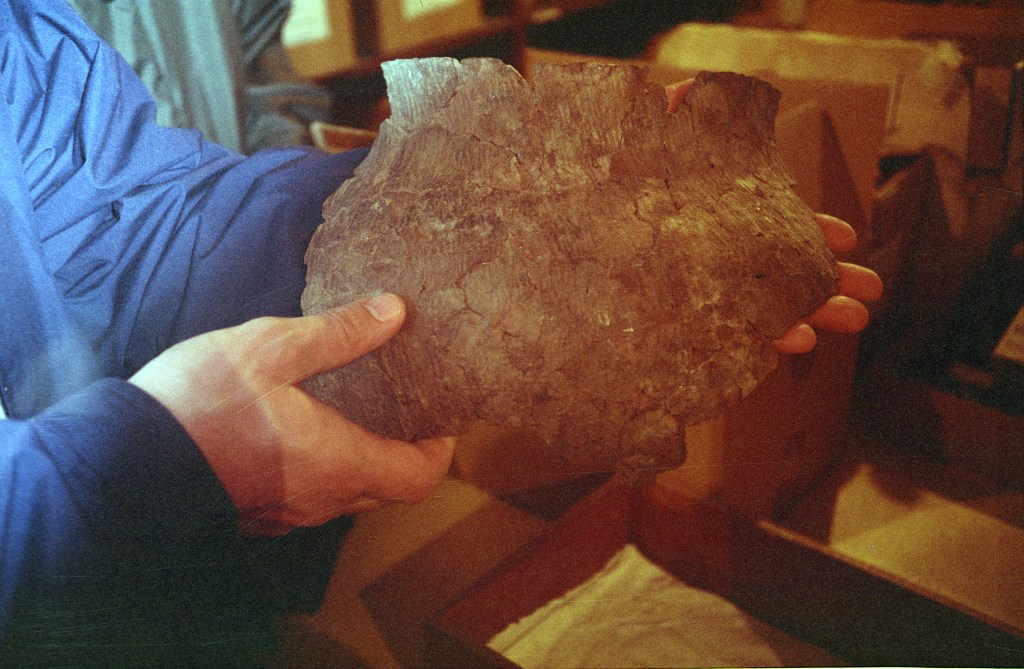
During digging operations in the 1960s, the late Professor Leland R. Cooper of Hamline University discovered a pre-Columbian pot in a fire pit buried under more than a meter (3 feet) of forest soil. This pot apparently collapsed in firing. It was reconstructed and is now in the University of Minnesota’s Bell Museum Archives. It was the opinion of Dr. Cooper that the broad, west-facing bay on this property was inhabited by Native Americans since at least the early 1400s. This region is well know to have been inhabited over several centuries. Native Americans were still collecting maple sap on this land in the early 1900s when our early family members were living on Arrowhead Point. Many of the old-growth maples on the southern, unburned end of this forest still bear sugaring scars that originate in the early 20th century. We still occasionally find rusted out sugar buckets on this land that date from this period. The southern end of this forest is one of the few parcels of forest land that was not burned over during the fires of the early 1900s. It is unique in its flora and fauna.
 The Wabana Lake Family Trust