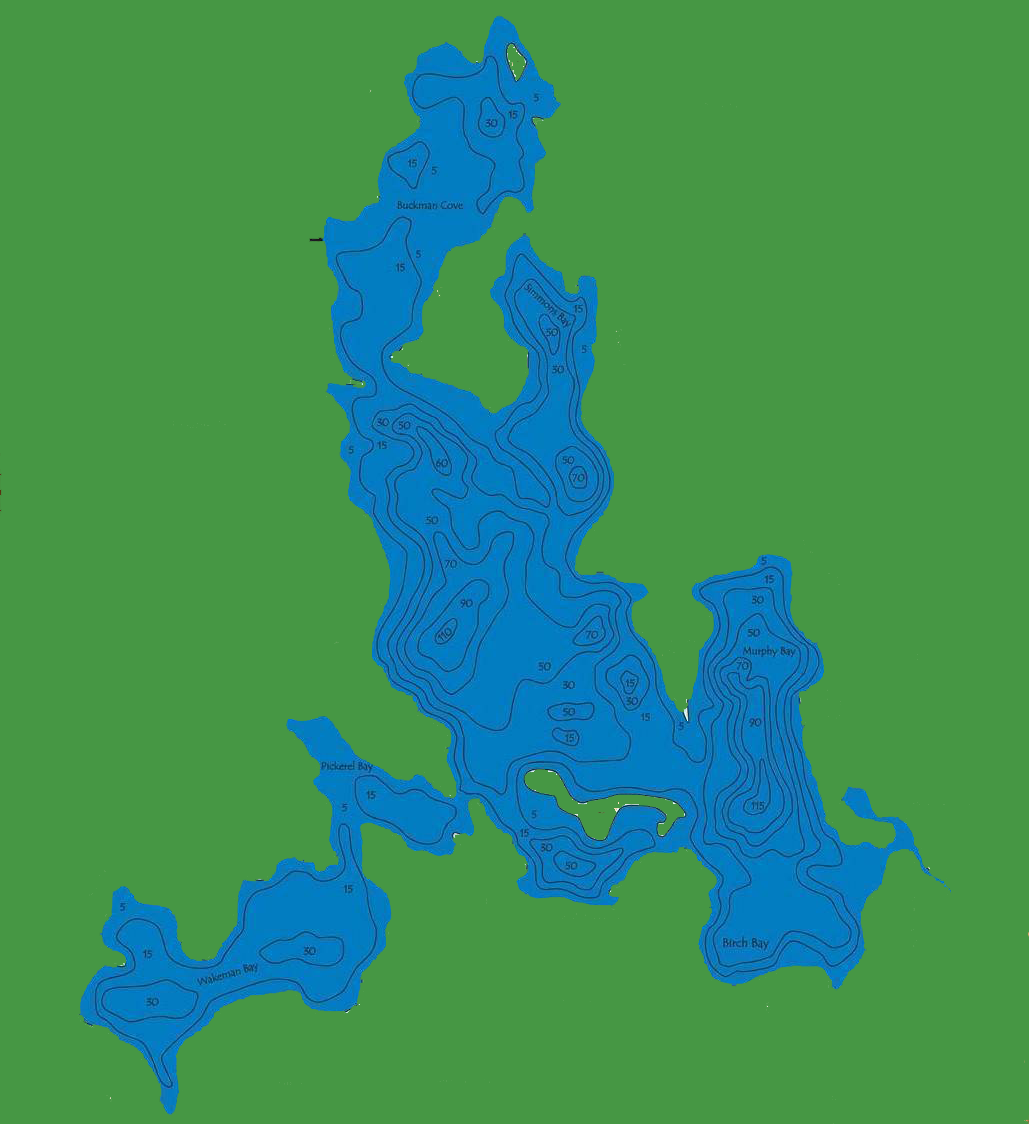
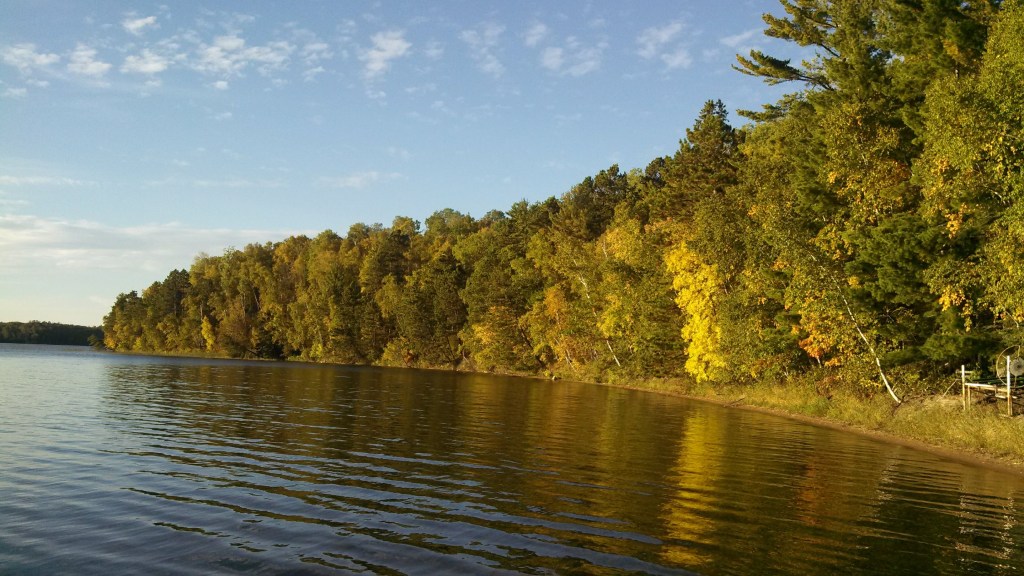
As part of our mission, we work as a family to preserve and improve forest, wildlife and fish habitat. Our active projects include our forest management plan for our 62 acres of woodlands and a continuing commitment to maintaining natural fish habitat and spawning areas along our nearly 5000 feet of shore.
We have had a certified forest management plan since 1987. Our current plan divides the forest into three zones, each with its own management approach. Below is a map of our forest (pink because it is infrared) and below that please find a narrative of what we are doing in each zone.
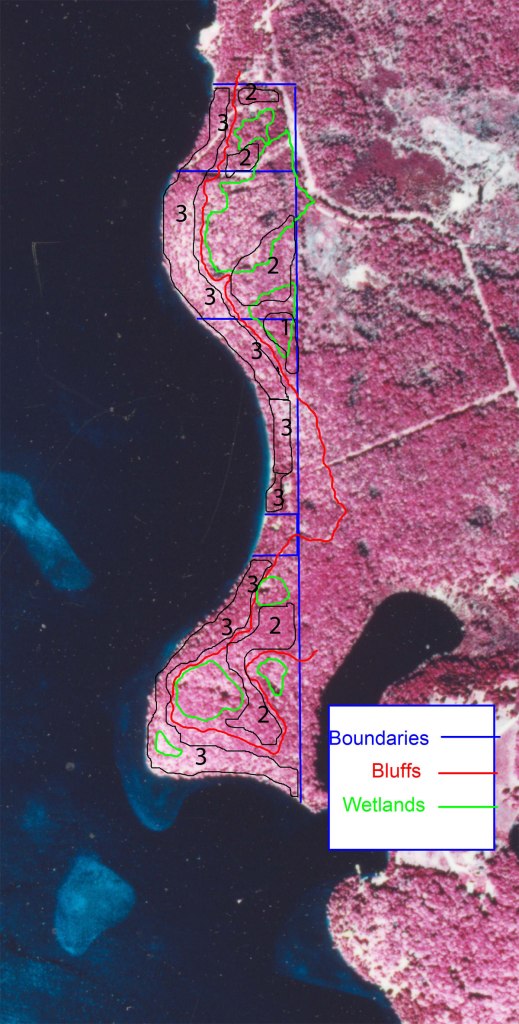
Management of this land is divided into three categories by the Stewardship Plan. Each of these management zones is indicated by black borders and numbers in the adjacent aerial photograph. The Minnesota DNR suggested the following actions.
Zone 1. This is a small zone of over-mature aspen. It was suggested that this stand be thinned of aspen by girdling leaving snags (standing dead trees) for wildlife habitat. We had planned to do this but much of this stand was felled by high winds. We are clearing these deadfalls but are leaving much of the woody debris to build soil carbon.
Zone 2. This is the upland area that is populated with northern hardwoods. Management of these stands has been complicated by the large extent of wetland vegetation interspersed among these upland forests. DNR suggested that we thin these stands, especially by removing over-mature aspen and birch; or that we leave this as old growth hardwood for wildlife. We have adopted a mixed strategy on these stands, thinning somewhat and leaving others. Due to the rarity of unimpacted forest wetlands and their fauna, we have avoided any management in areas with wetland vegetation.
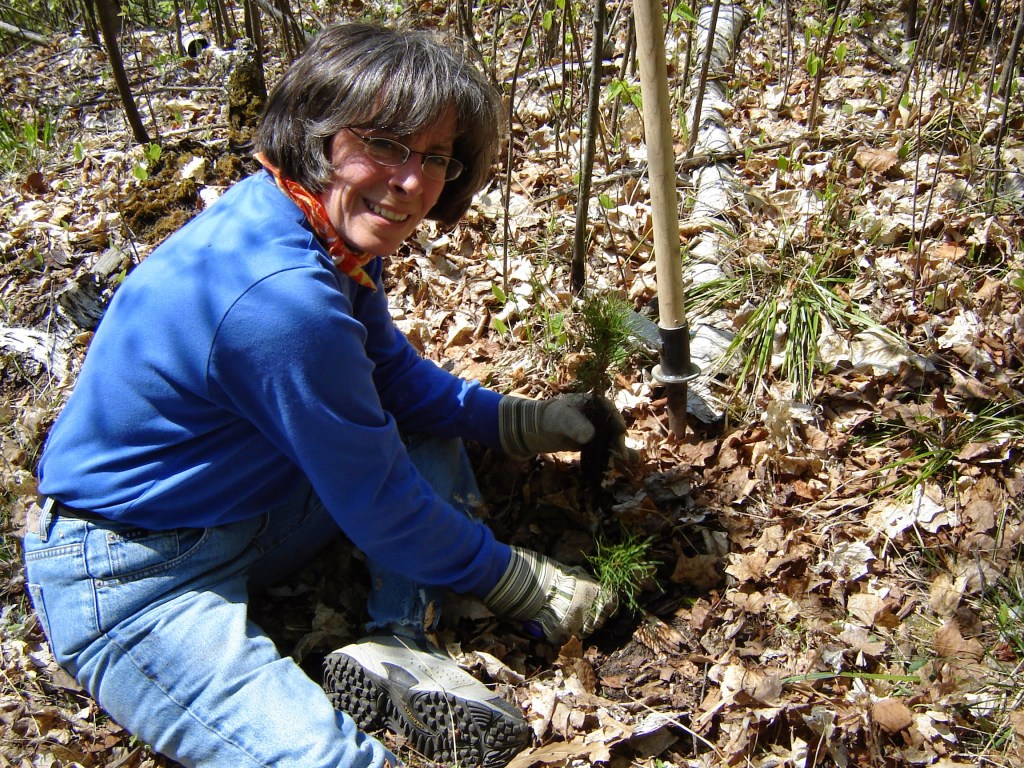
Zone 3. These stands are located along the steep bluffs of Wabana Lake and are comprised of mixtures of hardwoods and conifers. DNR has suggested the enhancement of some of the species along the shore by adding seedlings. Instead, since historical vegetation maps of this region show conifers and cedars along the bluffs, we have chosen to thin hardwoods and enhance the growth of conifers and cedars in these stands. We chose to only select local conifers, from original seedbanks, since we are concerned about maintaining genetic diversity of this forest. Betsy Downing reports that the southern part of this property was one of the few tracts in this region that did not burn deeply during the great fires in the early 1900s, so the shoreland offers the greatest potential for restoration of the original conifer vegetation. We also plan to harvest some of the hardwoods on the slopes over the next few years since these offer superior carving woods for market. We will use careful selective harvest to avoid disruption of steep bluffs.
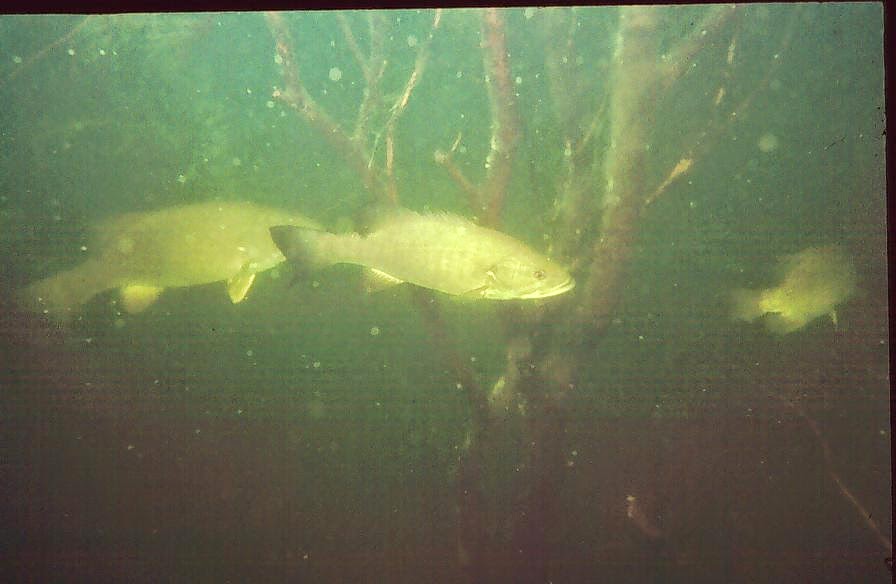
Sadly, one of the first things people do when they buy land and put up a lake house is to remove all the wood lying in the water, put up a dock, and remove water plants (aka weeds). This has the unintended effect of removing places fish need to shelter and feed and to destroy useful spawning habitat. We keep thousands of feet of lakeshore natural and we send down divers to increase woody debris (aka logs, sticks, branches) that help fish to live healthy and productive lives. Increasing fish habitat has been a principal family activity for 40 years.
 The Wabana Lake Family Trust