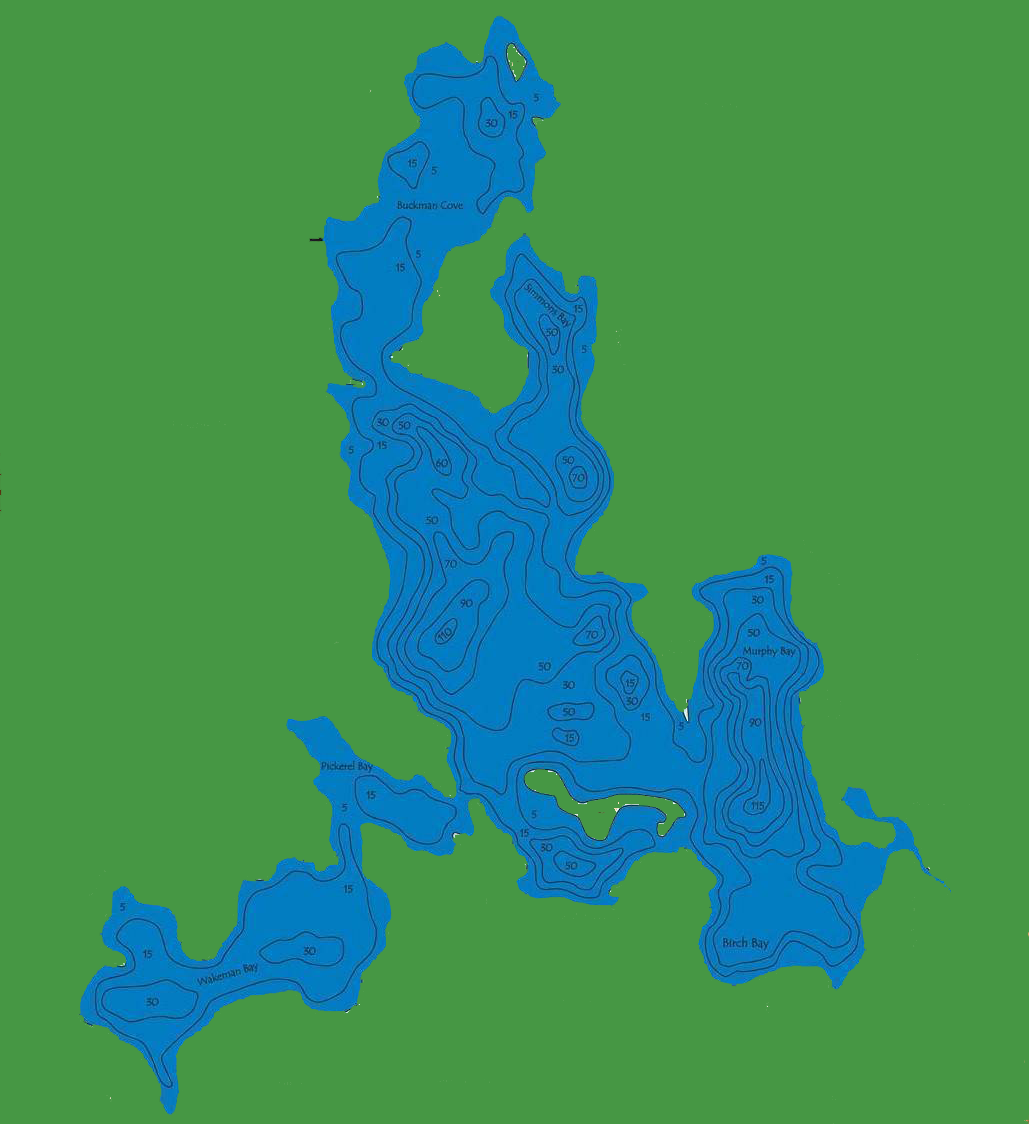
Wabana Lake is a nearly pristine headwater lake. Its excellent water quality is owed to the small size of the watershed and the large amount of conserved shoreline around it. In the early 1980s, Professor William Downing, then of Hamline University, founded the Wabana Lake Research Station to study the flora and fauna of these undisturbed shores and help the Wabana Chain of Lakes Association carry out a monitoring program. Dr. Downing’s interest in the aquatic sciences, and in the ecology of this particular chain of lakes, dates to the early 1950s.
William’s son, John A. Downing, became deeply interested in the aquatic sciences through working with his father at Wabana Lake. John later became a professor of ecology and limnology and carries out his family’s concern for healthy freshwater systems. A brief biography of Professor John Downing can be found here.
Some groups of organisms exist under pristine conditions that cannot survive when shores are used frequently by people. One such group is the freshwater mussels (Unionidae). These large clam-like animals are the most endangered group of animals on the planet, live to be several hundred years old, and were abundant along the shores of the Wabana Chain of lakes throughout its history. One of the first projects undertaken at the Station was to mark these animals and measure their growth, age, death, reproduction, and locomotion. This work has resulted in several landmark publications. It is through this research that scientists know that these mussels are some of the oldest animals in the world.

The Wabana Lake Research Station was originally started in a corner of a garage but has expanded to share a building with the forest shop facilities used to maintain forest and marine equipment. The lab has a spectrophotometer, precision balances, pH meter, thermistor and oxygen probes, a drying oven, muffle furnace, microscopes, autoclave, an incubator, GPS gear, bottom discriminating sonar, submarine video equipment, digital measurement equipment, and a variety of other facilities. We can support basic water chemistry research, bacteria analysis, and algae types and abundance.
 The Wabana Lake Family Trust